
 |
| Best Tyres for Jeep Wrangler (2025): Complete
Buyer's Guide for All Terrains |
A Comprehensive Guide to the Best Tyres for Jeep Wrangler
Summary
Selecting the best tyres for Jeep Wrangler in 2025 requires understanding different tire categories and their specific strengths. All-terrain tires like the BFGoodrich KO2 and KO3 offer balanced performance for mixed driving, while mud-terrain tires excel in extreme off-road conditions. Highway tires prioritize comfort and fuel economy for daily drivers, and dedicated winter tires provide superior snow and ice traction. The key is matching tire type to your driving style, terrain preferences, and climate conditions.
Introduction
Selecting the right tires for your Jeep Wrangler isn't just about getting from point A to point B—it's about maximizing your vehicle's legendary capabilities while ensuring safety and performance across diverse terrains. The tire market offers an overwhelming array of options, each designed for specific conditions and driving styles. Whether you're conquering rocky trails, navigating muddy backroads, or commuting on highways, the best tyres for Jeep Wrangler can dramatically impact traction, comfort, and tread life.
Modern Wrangler owners face unique challenges when selecting tires, as these vehicles must perform equally well on pavement and off-road terrain. From the aggressive BFGoodrich All-Terrain T/A KO2 that comes standard on Rubicon models to specialized winter tires with 3PMSF ratings, understanding your options is crucial for making an informed decision.
Types of Jeep Wrangler Tires
All-Terrain (AT) Tires
All-terrain tires represent the perfect compromise for Jeep Wrangler tires that need to handle both on-road comfort and off-road capability. These versatile tires feature moderate tread patterns with larger blocks than highway tires but smaller than mud-terrain tires, making them ideal for drivers who split time between pavement and trails.
The BFGoodrich All-Terrain T/A KO2 stands as the gold standard in this category, featuring CoreGard technology-enhanced sidewalls and a proven track record of 50,000-mile tread life. Its three-ply sidewall construction provides exceptional puncture resistance, while the interlocking tread blocks deliver reliable traction in mud, sand, and snow. The newer KO3 variant improves on this formula with better wet-weather performance and reduced road noise, though at a higher price point. For manufacturer specifics see BFGoodrich.
Falken Wildpeak AT3W offers excellent value in the all-terrain tires category, featuring heat diffuser technology and aggressive shoulder lugs that extend onto the sidewall for enhanced lateral traction. Its 3PMSF rating ensures reliable winter tires performance, while the step-down tread design creates additional biting edges for improved grip in loose terrain. Compare product details at TireTerrain.
The Toyo Open Country AT III rounds out the top all-terrain tires choices with its balanced approach to durability and comfort. Stone ejectors prevent damage from embedded rocks, while the symmetrical tread pattern promotes even wear patterns that can extend tread life beyond 60,000 miles.
Mud-Terrain (MT) Tires
Mud-terrain tires are engineered for maximum off-road performance in the most challenging conditions, featuring aggressive tread patterns with deep voids and large lugs designed to self-clean in mud and loose terrain. These tires sacrifice some on-road comfort and fuel economy for uncompromised off-road capability.
The BFGoodrich Mud-Terrain T/A KM3 leads this category with its Krawl-TEK compound that enhances grip on slick rock surfaces and Linear Flex Zone technology that allows the tire to conform to obstacles at low air pressures. The Terrain-Attack tread design features massive side lugs and deep voids that excel in deep mud conditions, while Traction-Armor sidewalls provide extra protection against cuts and abrasions. See comparison info at BFGoodrich.
Nitto Trail Grappler MT offers a hybrid approach, combining mud-terrain tires capability with improved on-road manners. Its reinforced sidewalls resist damage from sharp rocks, while the aggressive tread pattern maintains excellent self-cleaning properties. This tire represents a good compromise for drivers who need serious off-road capability but don't want to completely sacrifice daily driving comfort. For more on mud-terrain options visit DrivingLine.
For extreme applications, the Mickey Thompson Baja Boss A/T provides racing-bred durability with optimized tread patterns for traction and noise reduction. These tires dominate in sand, mud, and rock crawling scenarios while maintaining street-legal status for highway use. Product details: MotorTrend.
Highway/All-Season Tires
Highway tires prioritize comfort, fuel economy, and quiet operation for Wrangler owners who primarily drive on paved roads with occasional light off-road use. These tires feature smaller tread blocks, shallower grooves, and optimized compounds for longevity and efficiency.
The Michelin Defender LTX M/S exemplifies premium highway tires design with MaxTouch construction that distributes forces evenly across the contact patch for extended tread life. Its advanced compound delivers excellent wet traction while maintaining low rolling resistance for improved fuel efficiency. Expect 70,000-mile warranties from top-tier highway tires in this category. See manufacturer details at Michelin.
Continental TerrainContact H/T provides a balanced approach with modest all-terrain tires capability while maintaining highway tire refinement. Its Traction Grooves and Comfort Ride Technology deliver reliable performance in light off-road conditions without sacrificing on-road comfort. More info: Continental.
Bridgestone Dueler H/T 685 comes as original equipment on many four-cylinder Wrangler variants, offering proven reliability and comfort for daily driving scenarios. Its symmetrical tread pattern promotes even wear while providing adequate traction in various weather conditions. See Bridgestone details at Bridgestone.
Winter/Snow Tires
Winter tires become essential for Wrangler owners in cold climates, featuring specialized rubber compounds that remain flexible in freezing temperatures and aggressive siping for enhanced ice and snow traction. The 3PMSF rating (Three-Peak Mountain Snowflake) indicates these tires meet strict winter performance standards.
The Bridgestone Blizzak LT leads winter tire performance with its specialized compound that maintains grip in extremely cold temperatures. Its robust two-steel-belt construction enhances durability while aggressive tread patterns ensure optimal grip on icy surfaces and snowy roads. Deep grooves effectively channel slush and water, reducing hydroplaning risk in wet winter conditions. Manufacturer info: Bridgestone.
Nokian Hakkapeliitta R3 SUV offers both studded and non-studded options for different winter driving needs. This tire excels in extreme cold conditions with a rubber compound engineered for optimal grip and handling on ice and snow, while providing comfort and control on dry roads. Details: Nokian.
For Wrangler owners who want all-season tires with enhanced winter capability, many all-terrain tires with 3PMSF ratings provide adequate winter performance without requiring seasonal tire changes. The BFGoodrich KO2 and Falken Wildpeak AT3W both carry this certification, making them suitable for moderate winter conditions.
Top Jeep Wrangler Tire Recommendations
| Tire Model | Category | Key Features | Warranty | 3PMSF | Price (USD) |
|---|---|---|---|---|---|
| BFG AT T/A KO2 | All-Terrain | CoreGard walls | 50k mi | Yes | $250–320 |
| BFG AT T/A КОЗ | All-Terrain | Wet grip, quiet | 60k mi | Yes | $280–350 |
| Falken AT3W | All-Terrain | Heat diffuser | 55k mi | Yes | $200–280 |
| Toyo AT III | All-Terrain | Stone ejectors | 65k mi | Yes | $220–300 |
| BFG MT T/A KM3 | Mud-Terrain | Krawl-TEK compound | N/A | No | $320–450 |
| Nitto Trail MT | Mud-Terrain | Hybrid AT/MT design | N/A* | No | $280–380 |
| Michelin LTX | Highway / All-Season | Max Touch construction (fuel efficiency) | 70k mi | No | $180–250 |
| Bridgestone LT | Winter / Snow | Winter compound | N/A* | Yes | $250–350 |
Jeep Wrangler Tire Types Comparison Guide
Selecting the right tire begins with honestly assessing your driving style and the terrain you encounter most frequently. Daily commuters who occasionally venture onto gravel roads or camping trips will find all-terrain tires provide the best balance of comfort, fuel economy, and capability. These tires handle 90% of off-road scenarios while maintaining civilized on-road behavior for everyday use.
Serious off-road enthusiasts who regularly tackle rock crawling, deep mud, or extreme trail conditions require mud-terrain tires despite their compromises in road noise and fuel efficiency. The aggressive tread patterns and reinforced sidewalls of MT tires excel in scenarios where all-terrain options would struggle or fail.
Winter driving demands special consideration, as even capable all-terrain tires with 3PMSF ratings cannot match dedicated winter tires in extreme cold, ice, or heavy snow conditions.
Jeep Wrangler Tire Comparison
| Tire Type | Best Use Case | Tread Life (mi) | Noise Level (1–10) | Off-Road Performance (1–10) | Price Range (USD) |
|---|---|---|---|---|---|
| All-Terrain (AT) | Balanced on/off-road driving | 50,000–65,000 | 6–7 | 7–8 | $150–350 |
| Mud-Terrain (MT) | Aggressive off-roading | 40,000–50,000 | 8–9 | 9–10 | $200–450 |
| Highway / All-Season | Daily driving, fuel economy | 60,000–80,000 | 3–5 | 3–5 | $120–250 |
| Winter / Snow | Cold weather, snow & ice conditions | 40,000–60,000 | 5–7 | 6–7 | $180–400 |
How to Choose the Right Tires for Your Jeep
Terrain & Driving Style
Regions with harsh winters benefit from seasonal tire swaps, while moderate climates may find 3PMSF-rated all-terrain tires adequate year-round.
Tire Size & Fitment
Understanding tire size options is crucial for Wrangler owners, as different trim levels come with varying factory sizes that affect performance characteristics. 2025 Jeep Wrangler models typically feature sizes ranging from 245/75R17 on base Sport models to 285/70R17 on Rubicon variants, with some packages offering up to 315/70R17 options.
Factory tire sizes are engineered to work with the vehicle's gearing, speedometer calibration, and suspension geometry. Moving to larger diameter tires (such as 33-inch or 35-inch options) can improve ground clearance and off-road performance but may require recalibration and can affect fuel economy.
Lifted Jeep Wrangler modifications open up larger tire options, but proper fitment requires considering factors like backspacing, offset, and potential rubbing during full lock or suspension articulation. Tire load range becomes especially important for heavier tire and wheel combinations or when carrying additional gear for overlanding adventures.
Load Rating & Ply Strength
Tire load range significantly impacts both performance and durability, with higher ratings providing stronger sidewalls at the cost of ride quality. Load Range C tires offer a good balance for most Wrangler applications, providing adequate strength while maintaining flexibility for off-road aired-down driving.
Load Range E tires feature stiffer construction that resists punctures and supports heavier loads but can compromise ride comfort and off-road traction due to reduced sidewall flex. These become necessary for heavily modified Wranglers or those regularly carrying maximum payloads.
The choice between passenger (P-metric) and Light Truck (LT) construction affects load capacity and durability. LT tires generally provide higher load ratings and more robust construction suitable for serious off-road use, while P-metric tires prioritize ride comfort and fuel efficiency for highway driving.
Tread Pattern & Compound
Tread pattern directly influences traction characteristics across different surfaces, with deeper, more aggressive patterns excelling off-road but generating more noise level on pavement. All-terrain patterns balance these competing demands with moderate lug heights and siping for multi-surface grip.
Modern tire compounds incorporate advanced technologies like silica for improved wet traction and specialized winter compounds that remain flexible in cold temperatures. The BFGoodrich KO3's updated compound provides better wet braking performance compared to the proven KO2, demonstrating how compound improvements can enhance safety. For detailed comparisons see Discounted Wheel Warehouse.
Top Tire Recommendations for Jeep Wrangler by Category
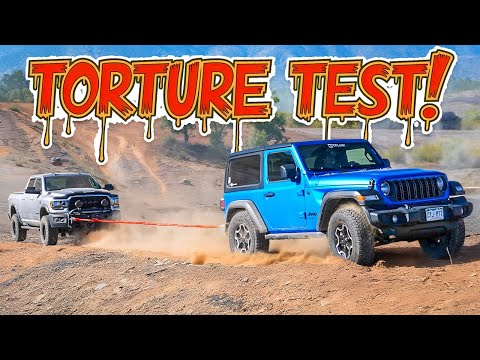
A professional comparison of BFGoodrich KO2, Firestone Destination XT, and Falken Wildpeak AT4W on a 2024 Jeep Wrangler. This real-world test covers uphill traction and snow performance, providing strong visual support to your tire recommendations.
Best All-Terrain Tires
The BFGoodrich All-Terrain T/A KO2 remains the benchmark for all-terrain tires despite being nearly a decade old, offering proven durability with 50,000-mile warranties and legendary sidewall strength. Its CoreGard technology and three-ply sidewall construction provide exceptional puncture resistance, while the aggressive shoulder design delivers reliable traction in varied terrain. The KO2's 3PMSF rating ensures winter capability, though its wet-weather performance lags behind newer competitors. See BFGoodrich specs at BFGoodrich.
The newer BFGoodrich All-Terrain T/A KO3 addresses the KO2's weaknesses with improved wet braking (184 feet vs 195 feet stopping distance) and reduced road noise while maintaining the legendary off-road capability. Advanced compound technology and full-depth 3D sipes provide 15–20% better wear and gravel durability, though the KO3 commands a premium price and limited size availability. For technical comparisons see TireTerrain.
Falken Wildpeak AT3W offers exceptional value with aggressive styling and heat diffuser technology that protects internal components during heavy use. Its step-down tread blocks create additional biting edges for superior traction, while wraparound shoulder lugs extend onto the sidewall for enhanced lateral grip. At 5–15% less cost than comparable options, the AT3W provides excellent all-terrain tires performance for budget-conscious buyers.
The Toyo Open Country AT III rounds out top recommendations with balanced performance and impressive 65,000-mile warranty coverage. Stone ejectors prevent embedded debris damage while the symmetrical tread pattern promotes even wear for extended service life. Its lighter construction compared to competitors can improve fuel economy and reduce unsprung weight. Manufacturer information: Toyo.
Best Mud-Terrain Tires
BFGoodrich Mud-Terrain T/A KM3 dominates the mud-terrain tires category with its Krawl-TEK compound that provides 8% better traction on rock and slick surfaces compared to its predecessor. The Linear Flex Zone technology allows the tire to conform to obstacles during aired-down driving, while Terrain-Attack tread design with massive side lugs excels in deep mud conditions. Traction-Armor sidewalls provide superior cut and chip resistance for extreme off-road durability.
Nitto Trail Grappler MT offers a unique hybrid approach, combining mud-terrain aggression with improved on-road manners through its balanced tread design. The reinforced sidewall construction resists damage from sharp rocks while maintaining reasonable highway comfort for drivers who need mud-terrain tires capability without completely sacrificing daily drivability.
Mickey Thompson Baja Boss A/T brings racing-proven technology to street-legal applications with optimized tread patterns for maximum traction and improved noise level reduction compared to traditional mud-terrain designs. These tires excel in sand, mud, and rock crawling scenarios while maintaining adequate on-road behavior for highway travel. Manufacturer details: MotorTrend.
Best Highway/Daily Tires
Michelin Defender LTX M/S leads the highway tires category with MaxTouch construction that evenly distributes contact forces for exceptional tread life and a 70,000-mile warranty. Its advanced silica-based compound delivers excellent wet traction while maintaining low rolling resistance for improved fuel efficiency, making it ideal for daily driving tires. See Michelin vehicle fitment at Michelin.
Continental TerrainContact H/T provides balanced highway performance with light off-road capability through Traction Grooves and advanced compound technology. Comfort Ride Technology reduces road noise and vibration for pleasant daily driving while maintaining adequate traction in various weather conditions. More: Continental.
Bridgestone Dueler H/T 685 offers proven reliability as original equipment on many Wrangler variants, delivering consistent performance for daily driving tires. Its symmetrical tread pattern promotes even wear while providing reliable all-season traction without premium pricing. Details: Bridgestone.
Best Winter/Snow Tires
Bridgestone Blizzak LT excels in severe winter conditions with specialized compound technology that maintains flexibility in extremely cold temperatures. Deep aggressive tread patterns provide optimal grip on ice and snow, while robust two-steel-belt construction ensures durability under challenging winter driving conditions.
Nokian Hakkapeliitta R3 SUV offers versatility with both studded and non-studded options for different winter driving needs and local regulations. The tire's rubber compound excels in extreme cold while providing comfortable on-road behavior when winter conditions aren't present. More: Nokian.
Goodyear UltraGrip Ice WRT features aggressive V-shaped tread patterns that enhance grip on snow and slush while preventing hydroplaning. The versatile design handles both highway and light off-road winter driving, making it suitable for Wrangler owners who need winter tires capability without limiting their vehicle's versatility. Manufacturer info: Goodyear.
Best Budget-Friendly Tires
General Grabber APT provides capable all-terrain performance at competitive pricing, featuring aggressive tread patterns and reliable construction for budget-conscious buyers who need versatile capability. While lacking some premium features of top-tier options, it delivers solid performance across varied terrain types.
Yokohama Geolandar G015 offers balanced all-terrain capability with proven reliability and competitive pricing. Its moderate tread pattern handles most off-road scenarios while maintaining reasonable on-road comfort and noise level characteristics.
Maintenance Tips for Wrangler Tires
Proper tire rotation extends tread life significantly and prevents uneven wear patterns that can compromise traction and safety. For Jeep Wrangler owners, rotation every 5,000 to 7,500 miles ensures even wear across all positions, with many choosing five-tire rotation patterns that include the spare tire for maximum longevity.
Five-tire rotation provides the most even wear by cycling all tires through different positions, though it requires more time and effort compared to four-tire patterns. The pattern typically moves the spare to the rear passenger position, rear passenger to front passenger, front passenger to front driver, front driver to rear driver, and rear driver becomes the new spare.
Tire pressure monitoring becomes crucial for Wrangler owners who frequently adjust pressures for different terrain types. The factory Tire Pressure Monitoring System (TPMS) alerts drivers to pressure changes, but manual verification with quality gauges ensures accuracy, especially after off-road adventures where pressures may be intentionally lowered for better traction.
Maintaining proper tire pressure improves fuel efficiency by up to 3.3% according to Department of Energy data, while underinflated tires can increase stopping distances and accelerate irregular wear patterns. The AAA research shows that 55% of vehicles have at least one underinflated tire, highlighting the importance of regular pressure checks.
Regular tread depth measurement using proper gauges prevents dangerous situations and ensures optimal performance. The traditional penny test provides a rough estimate, but dedicated tread depth gauges offer precision measurements necessary for safety decisions. Professional studies indicate that tire tread deteriorates at approximately 0.2/32 of an inch per 1,000 miles driven, meaning a typical 10,000-mile annual driver loses 2/32" of tread life yearly.
Tread depth below 4/32" significantly compromises wet weather performance, with AAA testing showing 87-foot increased stopping distances compared to new tires. This dramatic safety impact underscores the importance of replacing tires before reaching the legal minimum of 2/32".
Visual inspection should include checking for irregular wear patterns that indicate alignment issues, improper inflation, or suspension problems. Cupping, scalloping, or one-sided wear patterns require professional diagnosis to address underlying mechanical issues before installing new tires.
Seasonal Considerations
Winter tire storage and seasonal swapping require proper procedures to maintain tire integrity and performance. Tires should be stored in cool, dry locations away from direct sunlight and ozone sources, with proper inflation maintained during storage periods.
For Wrangler owners using dedicated winter tires, seasonal changeovers typically occur when temperatures consistently drop below 45°F, as winter compounds become less effective in warmer temperatures. Conversely, all-season tires with 3PMSF ratings may provide adequate winter performance in moderate climates without requiring seasonal changes.
TPMS sensor management becomes important for owners with multiple wheel sets, as sensors must be properly programmed or transferred between seasonal setups. Professional installation ensures proper sensor function and eliminates dashboard warning lights that can indicate system faults.
Expert Insights
According to Susan Gubasta, President & CEO of Mississauga Toyota and former President of the Trillium Automobile Dealers Association, "tire selection has become increasingly important as vehicle capabilities expand and driver expectations grow". Her dealership increased tire business by over 200% using advanced quoting tools that help customers understand their options and make informed decisions about tire upgrades.
Professional tire engineer Andy Dalrymple, founder of QQuote and former aerospace engineer, notes that "modern tire technology has advanced significantly, but consumer education remains the biggest challenge in helping drivers select appropriate tires for their specific needs and driving conditions". His experience developing tire selection systems highlights the complexity of matching tire characteristics to individual driving requirements.
Research from the Transportation Research Board indicates that approximately 30% of vehicles drive on unsafe tires between inspection periods, with tread deterioration rates varying significantly based on driving patterns and maintenance practices. This data supports the importance of proactive tirereplacement rather than waiting for inspection requirements or tire failure.

Tire Rack explains its independent testing process and why professional tire testing helps consumers make better purchasing decisions. Ideal for the “Expert Insights / Real-Life Examples” section.
Discover how run-flat tires work, their key benefits, and whether they’re worth the investment for your daily driving needs.
Explore the best-performing all-terrain tires for light trucks this year, balancing durability, comfort, and off-road traction.
Learn how to choose the right tires for your vehicle based on driving habits, road conditions, and performance needs.
Conclusion
The best tyres for Jeep Wrangler depend entirely on your driving priorities and terrain preferences. For balanced on-road and off-road performance, the BFGoodrich All-Terrain T/A KO2 or newer KO3 provide proven durability with excellent all-terrain tires capability. Daily driving tires prioritizing comfort and fuel economy should consider the Michelin Defender LTX M/S, while serious off-road enthusiasts need mud-terrain tires like the BFGoodrich KM3. Winter tires such as the Bridgestone Blizzak LT become essential in regions with severe winter weather.
2025 Jeep Wrangler models come with different factory tire size options depending on trim level and powertrain. Base Sport models typically feature 245/75R17 highway-oriented tires like the Bridgestone Dueler H/T 685 on four-cylinder variants. Nexen Roadian ATX tires are standard on V6-powered versions, while the capable Wrangler Rubicon receives aggressive 285/70R17 BFGoodrich All-Terrain T/A KO2 tires designed for serious off-road capability. Some packages offer larger 315/70R17 options for enhanced ground clearance and off-road performance.
Wranglers are well-suited for tire upgrades and modifications, with robust suspensions and ample wheel wells that accommodate larger tire sizes than most vehicles. Professional consultation helps ensure proper fitment and avoid costly clearance issues during full suspension articulation.
FAQ Section
Which tire is best for a Jeep Wrangler?
The best tire depends on your priorities: for balanced all-terrain tires, the BFGoodrich All-Terrain T/A KO2 (or KO3) is recommended; for mud-terrain tires the BFGoodrich KM3; for highway comfort, the Michelin Defender LTX M/S; and for severe winter conditions, the Bridgestone Blizzak LT.
What tires come with a Jeep Wrangler?
Factory tires vary by trim: base Sport models commonly have 245/75R17 highway-oriented tires like the Bridgestone Dueler H/T 685, V6 variants may use Nexen Roadian ATX, and Rubicon models often ship with 285/70R17 BFGoodrich All-Terrain T/A KO2.
Are Wranglers good tires?
Wranglers are versatile platforms that perform well with the right tire selection; choosing the appropriate tire size, tire load range, and type (AT, MT, highway, or winter) is critical to maximize performance and safety.
What size tires can I put on a Jeep Wrangler?
Stock Wranglers typically handle up to 33-inch tires (285/70R17 or 255/75R17) without modifications. With 2.5–3.5 inch lift kits you can run 35-inch tires (315/70R17) or larger with proper planning for gearing, brake clearance, and suspension geometry.


